
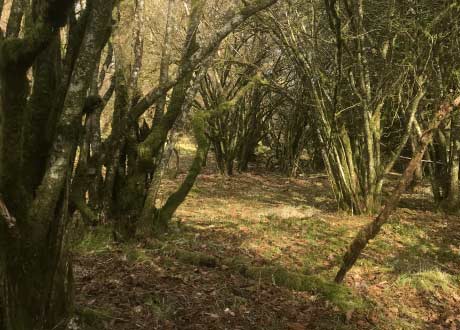
Coppicing is a traditional woodland management technique that was popular before the First World War but has been underused in Scotland since. Coppiced trees are cut at their base to encourage stronger, straighter regrowth, allowing more light to reach the forest floor and potentially increasing biodiversity by supporting a wider range of plant and animal life.
The Green Aspirations Scotland group will use their Healthy Planet, Healthy People award to investigate whether restoring traditional hazel coppicing can enhance biodiversity in a woodland that has been unmanaged in certain areas for over 25 years.
In collaboration with local primary school pupils, the community will survey areas of the woodland at different stages of the coppice cycle to identify any variances in biodiversity. Engagement with schoolchildren will include input from Dr Angela Newton, an experienced research scientist, and Kirsten Milliken, a Scottish folklore storyteller. Through classroom visits and field surveys, the pupils will support the research and follow-up analysis and assist in presenting the findings.
This project aims to engage local young people in ecology, cultural heritage, and storytelling traditions. The group also hopes its findings will help inform future woodland restoration projects and give coppicing a prominent role in climate policy.